Romestead Money Guide: Making Denarius & Quadrans
Last updated: 2026-08-23
Money in Romestead confuses people because there are two currencies, and the fast way to get rich isn't the obvious one. Selling carrots all day barely moves the needle — the real coin comes from clearing dungeons and from a couple of passive production loops you set up once and forget. Here's the whole economy, the fastest methods, and the merchant trick most players miss.
Want coin fast? Clear dungeons and crack their treasure chests — that's where the high-value Denarius comes from. For steady background income, automate an olive-oil chain and sell to the travelling trader. Grinding crops to sell is the slowest path.
On this page
Quadrans vs Denarius (the two currencies)
Romestead uses authentic Roman coinage with two tiers — and knowing which is which makes the whole economy click:
| Currency | Tier | How you earn it |
|---|---|---|
| Quadrans | Everyday / low | Selling goods to merchants — olive oil, crops, surplus materials, gear you don't need. |
| Denarius | High value | Clearing dungeons and opening the treasure chests inside them. |
Historically a Quadrans was a tiny bronze coin for minor purchases while a Denarius was a labourer's full day wage — Romestead keeps that ratio. So if a vendor or reward is denominated in Denarius, treat it as serious money; Quadrans is your day-to-day trading float. The sell values shown on item tooltips (the coin icon next to each item) are your everyday-currency take when you offload them.
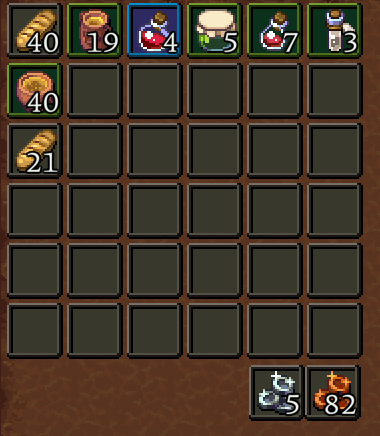
Fastest money: clear dungeons
If you want coin quickly, run dungeons rather than grinding crops. You earn Denarius mainly by conquering a dungeon and opening its treasure chests. The efficient pattern:
- Clear a biome's dungeons as you progress — they gate loot and currency both.
- Circle back to ones you've already beaten. A dungeon you've cleared is a low-risk Denarius run on repeat visits: you already know the layout and the threats, so you can move fast and grab the treasure.
- Bank the loot too — weapons, armor and materials from runs become Quadrans when you sell the surplus.
Crops sell for a pittance each (many basic items are 1–8 coins). A single treasure chest dwarfs an afternoon of selling vegetables. Combat gear from your class and the Bronze tier onward pays for itself in dungeon income.
Passive income: olive oil
The best hands-off earner is an automated olive-oil chain. Olive oil is a high-value trade good, and once the production line runs itself it generates currency while you're off doing other things:
- Set up the olive → paste → oil chain (Pottery quest, clay, Dolium). Full walkthrough in our Olive Oil & Dolium guide.
- Sell oil to the nomadic/travelling trader — they're your best oil buyer. Plan production so you have stock ready when they're actually in town.
- Because the chain can run via automation, this is income you collect rather than grind.
Scaling up: Trading Post routes
Once you unlock the Trading Post (gated behind the University, so you'll need Research Papers first), money-making becomes structural rather than manual. You can set trade routes between settlements so production moves itself and you simply collect the profit. This is the endgame of the economy: build the loops, automate the hauling with the Logistics Tent, and let routes turn surplus into a steady currency stream. (Trading Post specifics are still firming up in Early Access — we'll expand this section as routes are fully documented.)
Because dungeon treasure is the fastest Denarius in the game, the mechanics of re-running them matter as much as finding them — dungeons reset, chests can fail to spawn, and dying inside has its own recovery rules. All of it in our dungeons guide.
The merchant trick: sell for coin, buy for XP
See also For what merchants actually stock at each rank and in each biome — including Fish and the Canteen of Youth — see the Market & merchants guide.
Merchants have a counterintuitive quirk worth knowing, confirmed by testing:
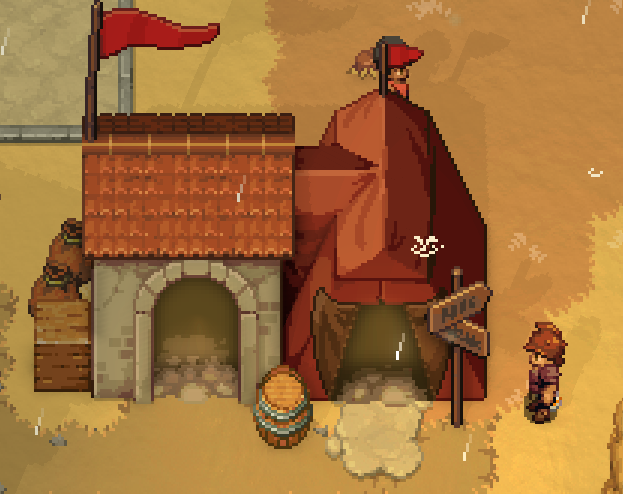
Selling gives you money but ZERO merchant XP. Buying is what levels a merchant — you gain XP roughly equal to the item's cost (about cost × 1.05–1.10). So if you want to level up a merchant (to unlock better stock), buy lots of cheap items in bulk; don't expect selling to do it.
Why bother leveling a merchant? Higher merchant tiers stock better goods — for example, a level 2 merchant sells the Canteen of Youth that resets your Favour Points. And to keep your buying cheap, court Mercury:
- Mercury, god of trade, has a Cheaper Prices blessing (−5% vendor price per tier) that lowers everything you buy.
- His real blessings unlock after the Cyclops, so don't over-invest in him early. Details in the Gods guide.
What's actually worth selling
For Quadrans, offload surplus rather than staples you still need. Rough value signals from in-game sell prices:
- Processed & trade goods — olive oil leads; processed materials beat raw ones (a Wood Plank sells for more than the Lumber it came from).
- Spare gear & trinkets — weapons, armor and trinkets carry real value (e.g. a Guarding Birch Idol trinket sells for ~50, Satyr Daggers ~40). Sell duplicates and outgrown tiers.
- Loot drops & bone — combat and exploration drops you won't use convert straight to coin.
- Don't sell bottleneck materials you're short on (Coal for the Bakery, Wood Planks for builds) just to raise petty cash — the opportunity cost isn't worth it.
For the full catalogue of sell values, see our Items & Materials reference.
Common questions
What's the fastest way to make money in Romestead?
Clear dungeons and open their treasure chests for Denarius, and re-run dungeons you've already beaten as low-risk coin runs. Pair that with a passive olive-oil chain for background Quadrans.
What's the difference between Quadrans and Denarius?
Quadrans is the everyday currency you get from selling goods; Denarius is the higher-value currency from dungeons and treasure. Denarius is the "serious money" tier.
Does selling level up the merchant?
No — selling earns coin but no merchant XP. Buying levels merchants (XP ≈ cost). Buy cheap items in bulk if you want to push a merchant to the next tier.
How do I make money while away from my settlement?
Automate an olive-oil chain (and later Trading Post routes) so production and selling continue without your input. That's the closest thing to passive income in Romestead.
Should I worship Mercury for money?
Eventually — his Cheaper Prices blessing cuts what you pay vendors — but his strong blessings only open up after the Cyclops, so don't rush him early.